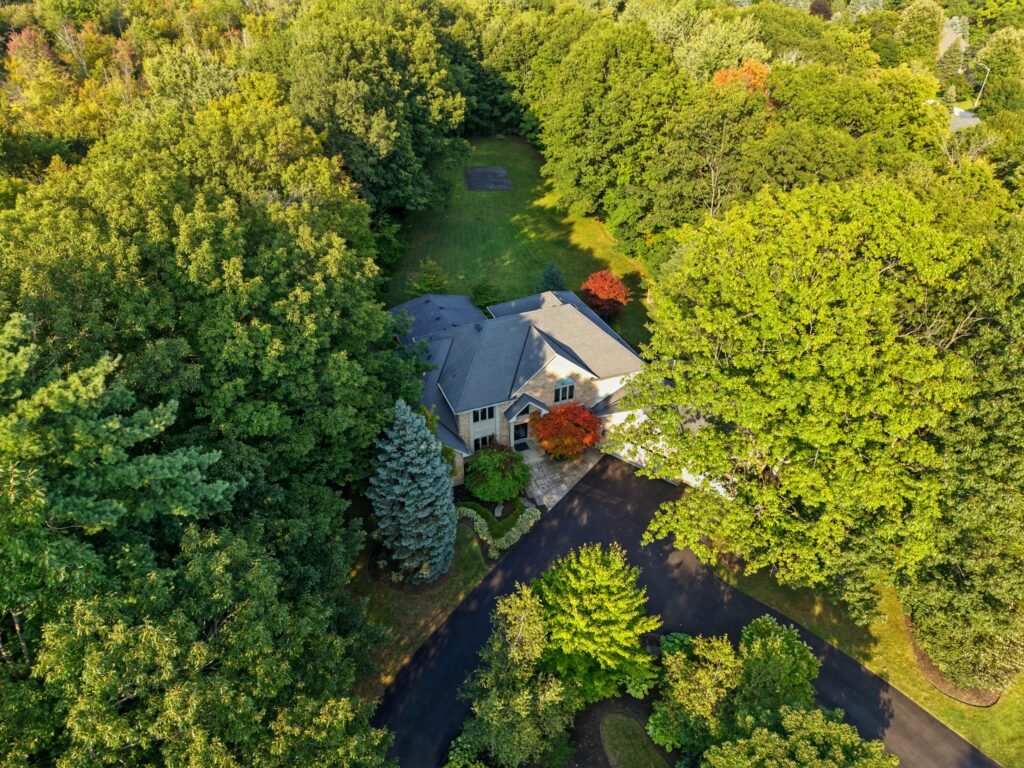
I was standing in the kitchen of a ten-acre property in Carlisle, in rural Flamborough. The house ran on a private well. My clients loved it: original hardwood, a tree line at the back of the yard, and a kitchen the sellers had redone the year before.
I turned on the tap. The water ran clear, with no smell and no cloudiness. It looked exactly like tap water in Burlington or Toronto, and that told me almost nothing. On a well, the things that matter, like bacteria and nitrates, only show up on a lab report. The same is true of the septic system, an old oil tank, and what a lender thinks the land is worth.
That is the real answer to the question of what conditions to put in an offer on a rural property in Ontario. The conditions exist to cover what you cannot see on a tour. On acreage, the order you run those checks in matters as much as the list itself.
An accepted conditional offer is not a firm deal
When a seller accepts your conditional offer, you have not bought the property yet. You have bought time: a window to check the things a showing cannot reveal. If a check fails, you can walk away or renegotiate. Once you go firm, that window closes, and anything under the lawn becomes yours.
In competitive situations, rural buyers are often tempted to drop the well condition or fold the septic into the general home inspection to make the offer look cleaner. On acreage, that is where the expensive surprises come from.
Step 1: Before the offer
Pull the well record. Ontario keeps records on private wells, searchable on the province’s well records map. A record can show how deep the well is and whether it is dug or drilled. Dug wells are shallow and more exposed to surface runoff. Drilled wells go deep and are cased the whole way down.
Walk the septic bed. Look for grass that is greener or softer than the rest of the lawn, a sewage smell, missing lids, or soil that looks dug up and refilled. Also look at what sits on top of the bed. Tire tracks, a parking area, or equipment on that part of the lawn can matter a great deal, as the Carlisle property showed.
Check the wellhead. The cap should sit well above the ground and fit tightly, with no cracks and no standing water around it.
Ask for records. Useful paperwork includes septic pump-out receipts, permits from the septic installation, the oil tank’s age and last inspection, and WETT documentation for any woodstove. Ask as well whether the septic is a standard system with a leaching bed or a holding tank that has to be pumped by truck on a schedule. A holding tank carries a very different ongoing cost.
Many rural properties have a thin paper trail, and that is not a dealbreaker on its own. It does raise the stakes on the inspections that follow.
If you are an executor or family member preparing to sell an inherited farm, this is the paperwork a buyer will ask for. Gathering it early helps.
Step 2: How I write the conditions
On my deals, each check gets its own condition: well, septic, insurance, financing, and the general home inspection.
The septic condition is the one most often bundled into the home inspection. When that happens, a clean report on the house can lead a buyer to waive everything at once, including a septic system nobody qualified has examined. A general home inspector is not there to evaluate a septic system, so the septic condition I write names a qualified septic professional.
Each condition also needs a window long enough for its slowest step, with room for a retest if a result comes back unclear.
I also ask for the seller to have the septic tank pumped before closing. If a buyer pays for the pump-out during the conditional period and the deal then falls apart over financing or anything else, the buyer has paid to service a tank on a house they will never own. With the seller covering it, a buyer who closes takes possession of a freshly pumped system, and a buyer who doesn’t close is not out the cost.
Step 3: Day one, the insurance call
Once an offer is accepted, the first call I make is about insurance. A lender will not release a mortgage without insurance on the house, so an uninsurable property can end a deal before any other check matters.
On older rural homes, the oil tank is usually the deciding factor. Insurers ask about the tank’s age, whether it is buried or above ground, and how it was built. Age limits vary from company to company, and past a company’s limit, some will not cover the home until the tank is replaced. An underground tank that is no longer in use has to be removed, and that work is done by a registered fuel oil contractor. Many insurers also ask for a WETT inspection on woodstoves.
If a tank needs replacing, that becomes a point of negotiation. It is far better to learn that on day one than the week before closing.
Step 4: Day one, the well inspection
I book the well and septic inspections the same day as the insurance call, because they are the hardest to schedule.
A well inspection covers three things.
Supply. The inspector runs the well and measures how much water it produces. A well can pass every water-quality test and still fail to keep up with a household. On acreage, where animals, gardens, or a shop may draw on the same well, supply matters even more. A flow test also helps explain low water pressure, which can come from worn equipment or from a well that cannot keep up.
Equipment. The pump, the pressure tank, and the wellhead.
Water quality. Public Health Ontario tests private well water for E. coli and total coliform bacteria at no charge. Samples need to be kept cool and dropped off within 48 hours of collection, so I usually handle the drop-off for my clients. Results are available through Public Health Ontario’s online portal within two to four business days. Some people call the result a “well water certificate,” but it is a lab report on a single sample taken on a single day.
The free test covers bacteria only. For properties next to farmland, a paid test for nitrates through a private accredited lab is often worth adding.
Bacterial problems are not rare. According to the City of Hamilton, about 28 percent of samples from private residential wells and cisterns in Hamilton had unsafe levels of bacteria in 2023. Those are samples owners chose to submit, not every well in the city, but clear water gives no indication of which group a well falls into.
Sources: Public Health Ontario, Well Water Testing · City of Hamilton, Well Maintenance and Water Testing
Step 5: Day one, the septic inspection
Septic inspections come in two levels. A basic visual inspection looks at the tank lid, the visible plumbing, and the ground over the leaching bed. When the seller is already pumping the tank, that is often enough.
A full inspection pumps the tank so the inspector can see inside it, check the baffles, and run a flow test. It costs more, and it is worth it when there is no pumping history, when the system is old, when the house has been vacant, or when something on the walk-through raised a concern.
At either level, a good inspection looks beyond the tank. The distribution box, which sends wastewater out to the bed, needs to be intact and clear. The system’s design should match how the house is used: a system built for three bedrooms can struggle after a basement is finished into two more. And it is worth asking whether the lot has space for a replacement system if this one ever fails. On a tight rural lot, that answer can outweigh everything else in the report.
Step 6: The appraisal and the general home inspection
While the rural checks are underway, the lender orders an appraisal. Acreage is harder to appraise than a suburban house. Lenders often value only part of the land and may discount outbuildings like barns and shops.
If the appraisal comes in lower than the offer price, the lender lends on the lower value, and the buyer either covers the gap or goes back to the seller. On my deals, the financing condition is not waived until the appraisal is back.
The general home inspection also happens in this window. It covers the house itself, such as the roof, the wiring, and the furnace. The rural systems need their own specialists.
Step 7: When results come back
A bad result is information, not an automatic end to the deal.
Bacteria in well water can often be cleared by disinfecting the well and the household plumbing, a process called shock chlorination, followed by a retest. Nitrates that persist usually call for a treatment system, which is worth getting a real quote on.
A septic problem can lead to a seller repair before closing, a price credit, or walking away.
Each condition gets signed off on its own, once its own results are in. Waiving everything together because most of the house looked good is how septic systems get waived without anyone examining them.
What happened in Carlisle
The Carlisle property from the start of this article was a spring deal. The well water came back clean.
The septic inspection did not. Vehicles had been driving over the leaching bed, and heavy equipment had been parked on it. The weight had crushed the pipes and compacted the soil until the bed could no longer filter wastewater. The bed needed to be replaced, and the repair was quoted at $45,000. The seller was not willing to do the work, so my clients walked away.
If the septic had been folded into the general home inspection, the outcome would have looked very different. The house was in good shape, the water passed, and everything could easily have been waived at once. My clients would have closed, and the $45,000 repair would have been theirs.
The water was fine. The septic was not. Neither was visible from the kitchen.
Quick answers
Does an accepted conditional offer mean I bought the house?
No. It means the seller has agreed to the deal subject to your conditions. The purchase becomes firm only once every condition is satisfied or waived.
How long does a conditional period last on a rural property?
The length is negotiated in each offer. Rural checks often need more time than a city purchase, because well and septic inspectors book further out and a water test may need to be repeated.
What can go wrong after an offer is accepted on acreage?
The most common rural problems surface in the well, the septic system, the oil tank, and the appraisal. None of them can be judged reliably on a showing.
Get the checklist
I keep a one-page version of this process: what to check before writing an offer, the order I run the checks once a deal is conditional, and the questions worth bringing to your own agent and lawyer. It is a checklist, not a template for your offer
This article is general information about rural real estate in Ontario and is not advice for any specific property or transaction. Speak with your own real estate agent and a real estate lawyer before making or firming up an offer.
Nate Baylor, Vickie Cooper Realty Group, RE/MAX Escarpment